





Without stormwater drainage, businesses, hospitals, and roadways cannot function safely during rainfall events. The concrete of the modern urban landscape acts as a funnel diverting water rather than absorbing it. Even seemingly small amounts of rain if not properly managed can rapidly pool in low lying areas causing standing water, flooding and even property damage. Modern stormwater systems protect urban centers by managing the collection and flow of rainwater and diverting it away from properties and roadways and into local lakes, rivers and retention ponds.
In residential properties stormwater drainage protects landscaping and makes backyards, patios and pool decks usable during or after rainfall events. Proper grading and drainage can be the difference between a perfect patio and a swampy yard teeming with mosquitoes.
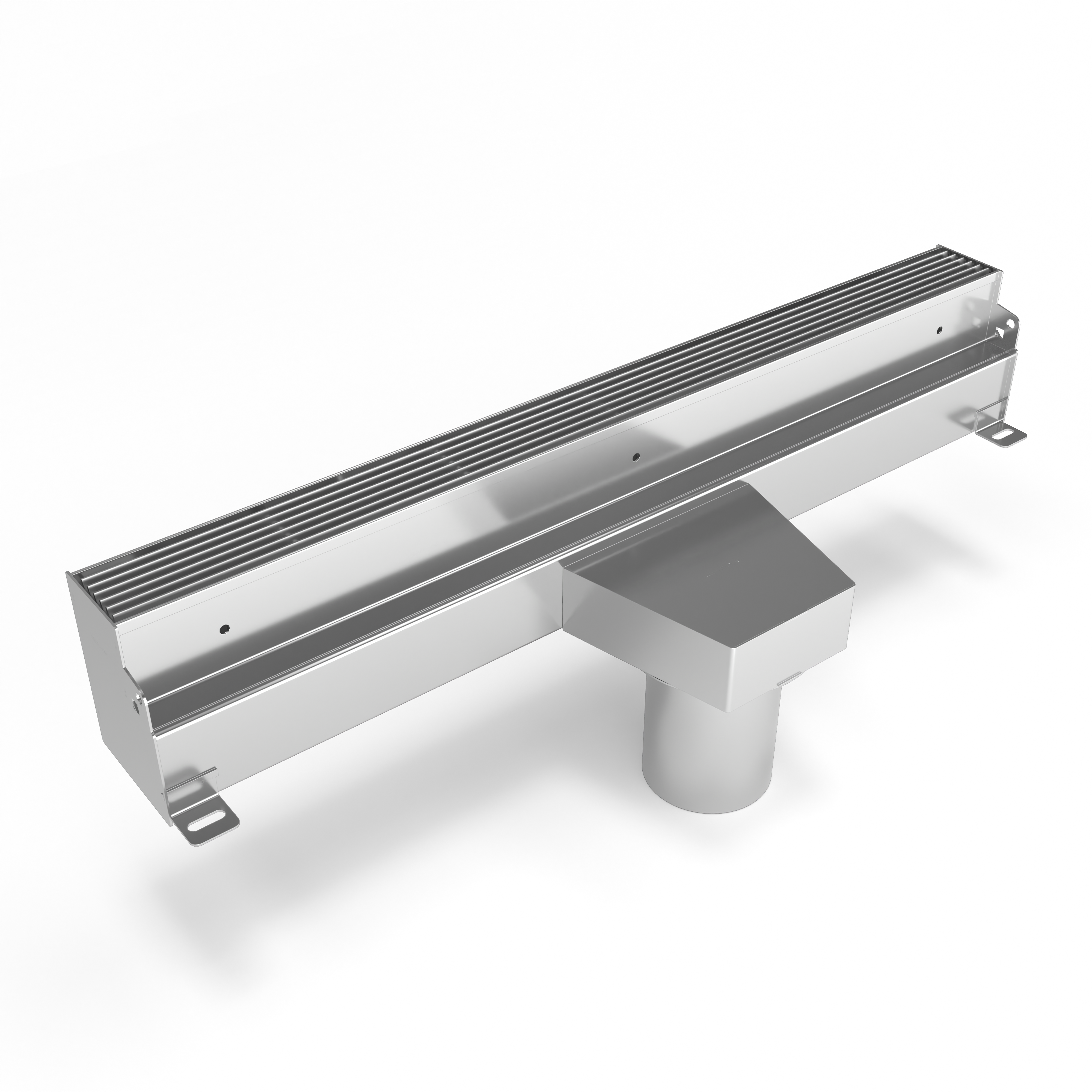
Global Drain Technologies offers modular, maintenance friendly, stormwater drainage through our commercial drainage line of linear drains, as well as our Landscape Drains division. Built from stainless steel these drains will not crack, tarnish or rust, setting them apart from plastic and cast iron drainage. Made to blend with any aesthetic, our drains integrate seamlessly with the urban environment making them a leading choice of landscape architects and contractors across North America.
Visit our technical resource library for downloadable documentation and specification strategies for stormwater drainage related projects.
How to Design a Stormwater Drainage System
Designing a stormwater drainage system is a complex undertaking. Specialized engineers use computer modelling and decades of meteorological data to predict rainfall location, duration and intensity before construction begins. Using this data they lay out a series of graded terrains, drains and piping to carry water away from affected areas and towards lakes, streams and retention ponds.
This document presents 7 of the essential ingredients used in stormwater drainage design. To bring all of these elements together requires professionalism, experience and capacity. While this document can provide the framework of a successful stormwater drainage layout, we always recommend consulting a local expert (such as an engineer, architect or contractor) before beginning a stormwater drainage project.

The 7 Factors of Stormwater Drainage Design
-
Peak Runoff
-
Catchment Area
-
Grading and Drainage Channels
-
Location and Number of Drains
-
Flow Rates and Load Class Ratings
-
Underground Piping
-
Maintenance

Peak Runoff
Peak runoff is the maximum amount of water that will become runoff, aka, water not absorbed by the ground. Engineers predict peak runoff using historical data and computer modeling. This prediction, known as the peak runoff rate (Q), is typically calculated using the rational method formula: Q = CiA. Where: (Q) is the peak runoff, (C) is the runoff coefficient (amount absorbed by the ground), (i) is the rainfall intensity and (A) is the catchment area.
The term Q also represents the statistical likelihood of different rainfall events. For example, a Q2 event is one expected every two years, while a Q100 event is only statistically likely to occur once every 100 years. It is important to note that a Q100 event can happen more frequently than once a century; the designation only reflects its low statistical probability based on historical datasets.
Using the Q value architects and engineers can decide how robust their drainage system needs to be. For example a residential home might have drainage for a Q5 or Q10 event while a hospital could be required to build to a Q100 event standard.
Catchment Area
A catchment area is defined as the entire region from which runoff is collected. Engineers determine these areas through the analysis of topographical maps or by conducting site surveys. Catchment areas are often hierarchical, with smaller ones nested within larger ones. Their size and direction are fundamentally determined by the elevation and grading of the land.
For instance, a single property might have: a backyard that constitutes one catchment area, and a front yard that forms a separate catchment area. Both, however, are part of a broader catchment area that channels water toward a main roadway. Extending this concept, the entire neighborhood would then belong to an even larger catchment area, one that follows natural topographical variations established before the development of the city.
Grading and Drainage Channels
Grading is the process of reshaping, elevating, or leveling land surfaces to create a specific, functional contour or slope. In nature water flows from high points to low points. While it may not always follow the most direct route it will still always follow this basic principle.
When planning for stormwater drainage it is important to take into account grading. The grading of your catchment area will determine the overall direction of the flow of runoff. Swales and drainage channels are often created in addition to grading. These help to channel the water towards drainage inlets.
Location and Number of Inlets / Drains
Drains should be placed in low lying areas to maximize efficiency.
 In stormwater drainage design it is recommended to reshape the land to optimize drainage. However if this is not possible drains should be placed in low lying areas to collect runoff. Drains should be present in numbers appropriate to accommodate peak runoff.
Flow Rates and Load Class Ratings
Flow rates are dependent on length and width of the drainage inlet. Flow rates are generally measured in gallons per minute (liters per minute). By calculating peak runoff for your catchment area and dividing it by the number of drains selected you can determine the required flow rate for each drain. Consulting the manufacturer of your drain will help to determine the flow rate.
Load class ratings are the amount of weight that a drain has been tested to withstand. Load class ratings range from light duty (made for pedestrians) to heavy duty (made for large trucks).. The placement of your drain will determine what load class rating it needs to have. Load class ratings are often dependent on installation, meaning that drains need to be installed as per manufacturer’s recommendations in order to meet specified load class ratings.
Underground Piping
Whatever type of drain you select it will need to connect to some sort of underground piping to transport the water away from the catchment area. Popular types of piping include: concrete, PVC, and stainless steel. This piping needs to be sized appropriately to accommodate the combined flow rate of every drain that cumulatively feeds into the system. The formula to calculate Volumetric Flow Rate is Q=πD2v / 4 Where d=the diameter of the pipe and v equals the average velocity of the liquid in the pipe.
It is advisable to have some sort of filtration system between your drain inlets and your underground piping. Drains can be directly connected to underground piping however this could present issues with debris finding its way into the underground piping and clogging it over time. The use of catch basins with integrated strainer baskets is an effective way to manage inflows of debris into your underground piping.
Maintaining stormwater systems
Legacy Drainage systems can add headaches to municipal budgets as they are nearly impossible to maintain without the use of specialized tools.
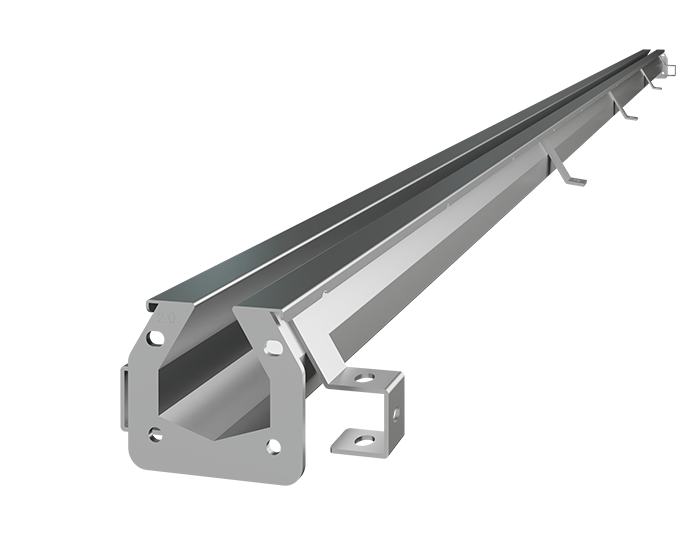
 A maintenance friendly design is one that is easy to access and clean. Systems with must be accessible with removable grates on catch basins. These systems can easily be cleared of debris without professional tools. Pre-sloped systems take the guesswork out of levelling ensuring that drains have a consistent 0.5% slope combatting standing water. Stainless steel drains should also be considered due to their durability and cleanability.
Linear Drainage Solutions
Global Drain Technologies offers a range of linear stormwater drainage solutions. These premium products hide in plain sight. Giving a modern integrated look to urban drainage and blending seamlessly with any aesthetic.

A pre-sloped, stainless steel, drainage system that comes with a catch basin, strainer basket and dedicated cleaning tools is recommended for long-lasting, maintenance friendly and hygienic stormwater drainage systems.
Catch Basins: Reimagining the Sump

Catch basins act as the essential transition point between surface drainage and underground plumbing. They are designed to temporarily store and transfer stormwater while serving as a critical access point for maintenance. In a stormwater system, they provide a physical break that traps debris and yard waste in an integrated strainer basket, preventing clogs in subsurface pipes and allowing for easy retrieval of lost items.
Each catch basin is specific to the drain profile that it serves. Because of this catch basins and linear drains should be purchased together as a system.
The Invisible Drain: 7000 Series for Total Paver Integration

The 7000 Series is a highly versatile landscape drainage option that manages stormwater without compromising aesthetics. It features a narrow slot opening and a throat extension that allows the inlet to integrate completely with hardscape surfaces like patios and pool decks. This makes it virtually invisible while providing functional, pre-sloped drainage to prevent standing water.
The Space-Saver: 4000 Series "Wall Hugger"

Designed specifically for areas where space is limited, the 4000 Series features one flat side, allowing it to be installed directly against walls. This "wall hugger" design is ideal for managing runoff in tight spaces such as plazas and sidewalks. Like the 7000 Series, its narrow slot and throat extension allow it to blend seamlessly into the surrounding landscape.
The Curve Specialist: Radius Drain

The Radius Drain is engineered to follow the flowing aesthetics of a landscape project by matching specific curved radii. It is particularly useful for managing stormwater around unique design features, courtyards, or winding walkways. It features a flat side for installation against walls and remains pre-sloped to ensure efficient water movement along curved paths.
The Budget-Friendly Aluminum Slot Drain

The 3000 Series is a simple and economical solution for stormwater management, featuring a hybrid construction of a premium aluminum body and a stainless steel slot. It utilizes a neutral slope design, making it an ideal choice for areas where elevation or depth concerns make pre-sloped drains unfeasible.
The All-Rounder: 6000 Series for Garages and Driveways

The 6000 Series is built for durability and functionality in areas with shallow depth requirements, such as shallow concrete slabs or second-story plazas. Its low-profile design and high flow rates make it an excellent "all-rounder" for managing water in residential or light commercial settings like garages and driveways.
The Workhorse: 8000 Series for Heavy Vehicle Traffic

This durable, high-capacity slot drain is designed for demanding environments like wash bays, workshops, and warehouses. As a "workhorse" for stormwater and industrial runoff, it features a heavy-duty Load Class E rating, meaning it is specifically engineered to withstand the weight of forklift traffic and other heavy vehicles.
The Roadmaster: 11,000 Series for Highway Traffic Load Ratings

The 11,000 Series is a high-capacity modular drain designed for large-scale infrastructure projects such as roadways and airports. It is built to meet the most rigorous standards, including AASHTO HS-25 and DIN EN 1433 Class-F, making it suitable for high-speed highway traffic and heavy airport machinery.
Cleaning Tools
To maintain efficient stormwater flow, GDT offers specialized tools to keep drains clear of debris:
- Cleaning Paddles: These are custom-fit to the drain’s profile, allowing users to easily pull debris along the channel and into the catch basin.
- Cleaning Brushes: These feature chemical-resistant bristles and long handles to provide the leverage needed for a thorough clean of the slot interior.
- Pressure Washer Attachment: An engineered nozzle that attaches to any pressure washer to scour the inside of the drain.
Purchase or Specify Today
Through our Technical Resource Library Global Drain Technologies provides access to CAD and Revit files, Installation instructions and master specification documentation for our portfolio of stormwater drains and accessories. This tool allows engineers and architects to easily specify and incorporate our wide range of drainage into their stormwater related projects.
In addition to standard options we provide custom solutions through our in-house design and engineering services. Our vertical integration into the marketplace means close contact between our team and our clients. Our project managers provide a single point of contact to manage projects from design through manufacturing and delivery. Providing a worry free turnkey solution on-time and on-budget.
Contact a drainage design expert
The Global Drain Technologies Alliance Partner Network connects our clients with qualified local contractors. With a range of partners ranging from plumbing and mechanical contractors to landscape professionals and even design build firms we can connect you with professionals who can take your stormwater drainage project from concept to delivery.
Find a local stormwater professional